
 Image 1 of 1
NAD+ comes in 3 different forms of Administrations and Dosing.
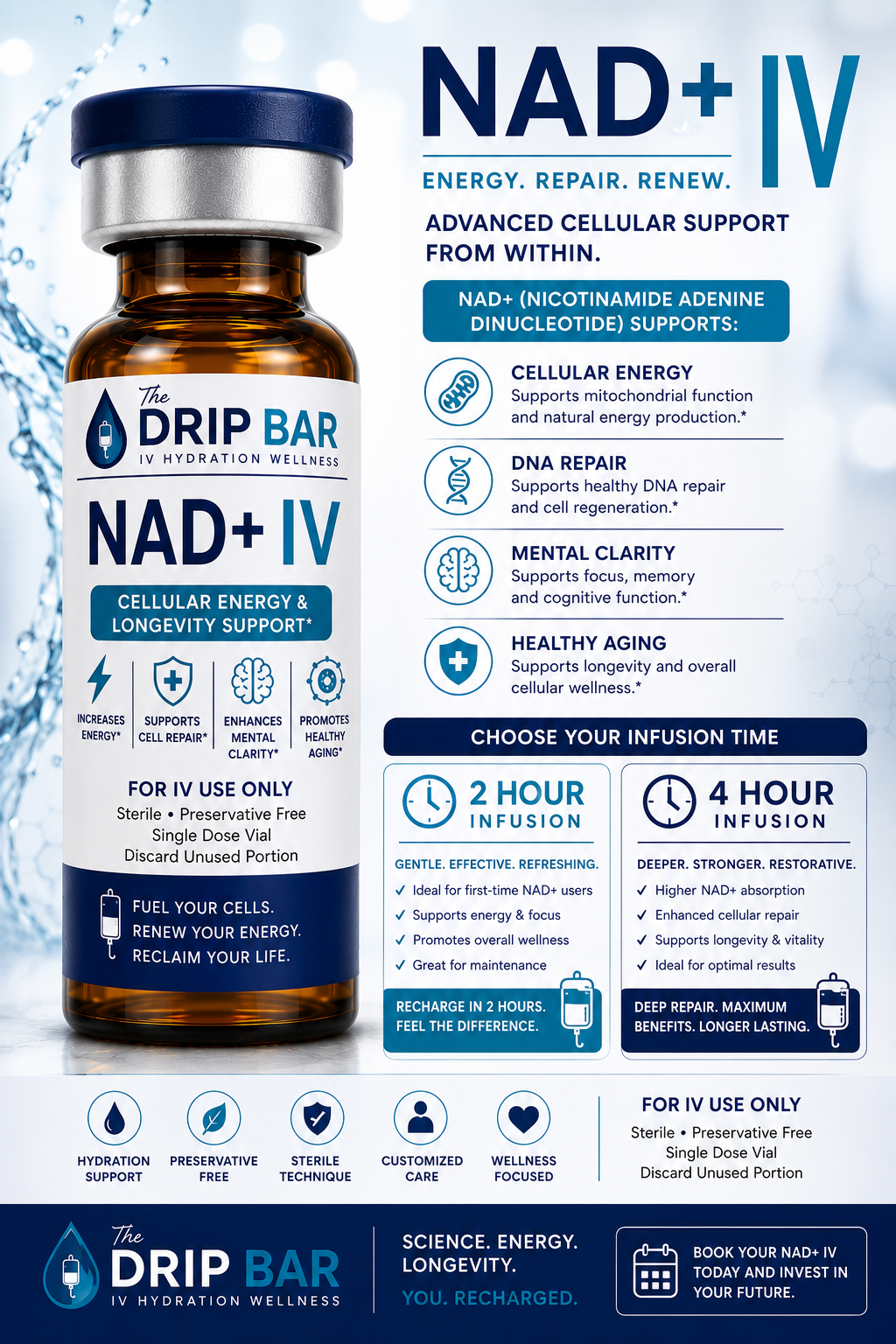
IV: 2 hours or 4 hours Weekly
IM (Intramuscular): 50 mg up to 3 times a week
SQ (Subcutaneous): 30 Units every day for 1 week (7 days) then increase to 50 units only 5 days (M-F)
NAD+ is probably the most important co-factor for improving mitochondrial function. Mitochondria are intracellular organelles (AKA “energy powerhouses”) where micronutrients are converted to energy-rich ATP molecules for the cell.
As we age, our body’s NAD levels gradually drop due to lower intrinsic production and inflammation/oxidative stress caused by environmental factors.
This drop in NAD+ can cause fatigue, mental fog, dull and tired skin, and poor sleep quality. Boosting NAD+ may help manage a wide spectrum of diseases and the effects of aging.
Other Uses Research has shown that NAD+ may have potential for fighting the effects of addiction. Excessive alcohol and drug use diminishes the amount of NAD naturally found in the body; by reintroducing it through NAD therapy, cravings and withdrawal effects may be reduced as a result. Additionally, NAD+ has been shown to boost serotonin, aiding with symptoms brought on by depression and anxiety.
NAD+ comes in 3 different forms of Administrations and Dosing.
IV: 2 hours or 4 hours Weekly
IM (Intramuscular): 50 mg up to 3 times a week
SQ (Subcutaneous): 30 Units every day for 1 week (7 days) then increase to 50 units only 5 days (M-F)
NAD+ is probably the most important co-factor for improving mitochondrial function. Mitochondria are intracellular organelles (AKA “energy powerhouses”) where micronutrients are converted to energy-rich ATP molecules for the cell.
As we age, our body’s NAD levels gradually drop due to lower intrinsic production and inflammation/oxidative stress caused by environmental factors.
This drop in NAD+ can cause fatigue, mental fog, dull and tired skin, and poor sleep quality. Boosting NAD+ may help manage a wide spectrum of diseases and the effects of aging.
Other Uses Research has shown that NAD+ may have potential for fighting the effects of addiction. Excessive alcohol and drug use diminishes the amount of NAD naturally found in the body; by reintroducing it through NAD therapy, cravings and withdrawal effects may be reduced as a result. Additionally, NAD+ has been shown to boost serotonin, aiding with symptoms brought on by depression and anxiety.